Published July 20, 2026 · by San Juan Roofing Co.
Key takeaways
- Four roof types lead on island homes: standing-seam metal, architectural asphalt shingle, flat/low-slope membrane, and old cedar that we remove and replace.
- Standing-seam metal is the best long-term island value at 50+ years, and it shrugs off salt air with marine-grade Kynar 500 / PVDF coatings.
- Architectural asphalt shingles ($9,000-$24,000) are the budget-friendly standard, best for wooded lots and shorter ownership.
- Flat and low-slope sections need a membrane (TPO, PVC, EPDM, or torch-down), never pitched-roof shingles or panels.
- We do not install new cedar. We remove it and replace it with asphalt or metal that last longer and resist moss and fire.
Picking a roof starts with knowing your options. In the San Juan Islands, the shortlist is shorter than the mainland’s. Salt air, about 40 inches of rain a year, moss under the Douglas firs, and west-side wind about 20% stronger than Anacortes rule out some materials and reward others. This guide walks through the roof types that hold up on island homes, what each roughly costs, and how your roof’s shape factors in.
San Juan Islands homes use four main options: standing-seam metal, the best long-term choice; architectural asphalt shingles, the budget-friendly standard; flat or low-slope membrane for low-pitch sections; and old cedar shake, which we remove and replace instead of reinstalling. Roof shape — gable, hip, or flat — also shapes the best fit.
Roof types at a glance
Every figure below is an island estimate — the ranges we actually see on San Juan, Orcas, Lopez, and Shaw. Out here, ferry logistics and off-island disposal add about 10-25% over a similar mainland job. Treat them as planning numbers for education, not quotes.
| Roof type | Island lifespan | Best for | Moss resistance | Rough installed cost |
|---|---|---|---|---|
| Standing-seam metal | 50+ years | Forever-homes, waterfront, low upkeep | High | $14,000-$45,000+ |
| Architectural asphalt shingle | 20-30 years | Tighter budgets, wooded lots, shorter holds | Lower | $9,000-$24,000 |
| Flat / low-slope membrane | 15-30 years | Flat roofs, additions, modern designs | Moderate (needs drainage) | $8,000-$26,000 |
| Cedar shake (legacy) | 20-40 years (historic) | No longer recommended here — replace | Very low (rots, holds moss) | Replacement $11,000-$40,000+ |
Standing-seam metal: the best long-term island roof
For most island homes, standing-seam metal is the roof type we recommend. It routinely reaches 50 years or more, so many homeowners install it once and never re-roof again. Its smooth, interlocking panels shed our 40 inches of rain a year, give moss almost nothing to grip, and have few edges for west-side wind to catch. Near saltwater — Roche Harbor, Deer Harbor, a Lopez shoreline — we spec marine-grade 24-gauge steel with Kynar 500 / PVDF coatings and rust-resistant fasteners. The panels then shrug off salt that would age cheaper metal fast. The upfront cost is higher, but on a cost-per-year basis metal usually wins. See standing-seam metal roofing to check whether it fits your home.
Architectural asphalt shingles: the budget-friendly standard
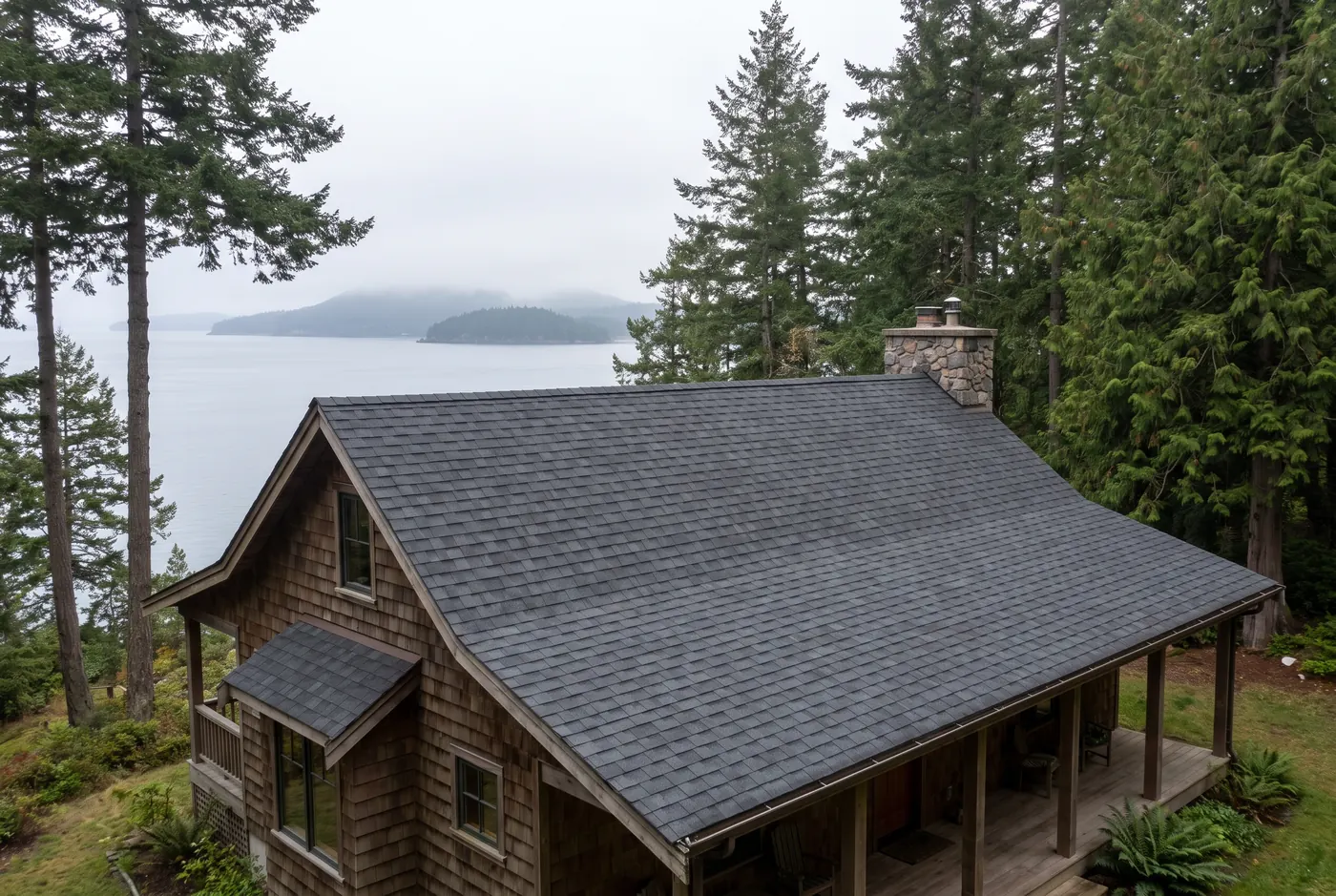
Architectural asphalt shingle is still the most common roof on the islands, and for good reason. It’s the lowest upfront cost at roughly $9,000-$24,000, and its layered texture blends into wooded lots around Eastsound, Olga, and Friday Harbor. Shingles are rated for 25-30 years. But our moisture, moss, and salt air tend to pull real-world island life closer to 20-25, and lower on heavily shaded north slopes under Douglas fir. We are a certified installer for IKO (ROOFPRO Select), Owens Corning (Preferred Contractor), and CertainTeed, so we install shingle systems built for this climate. Expect ongoing moss upkeep, and add zinc or copper ridge strips to slow regrowth. Learn more about asphalt shingle roofing for your project.
Flat and low-slope membrane: for the parts a pitched roof can’t cover
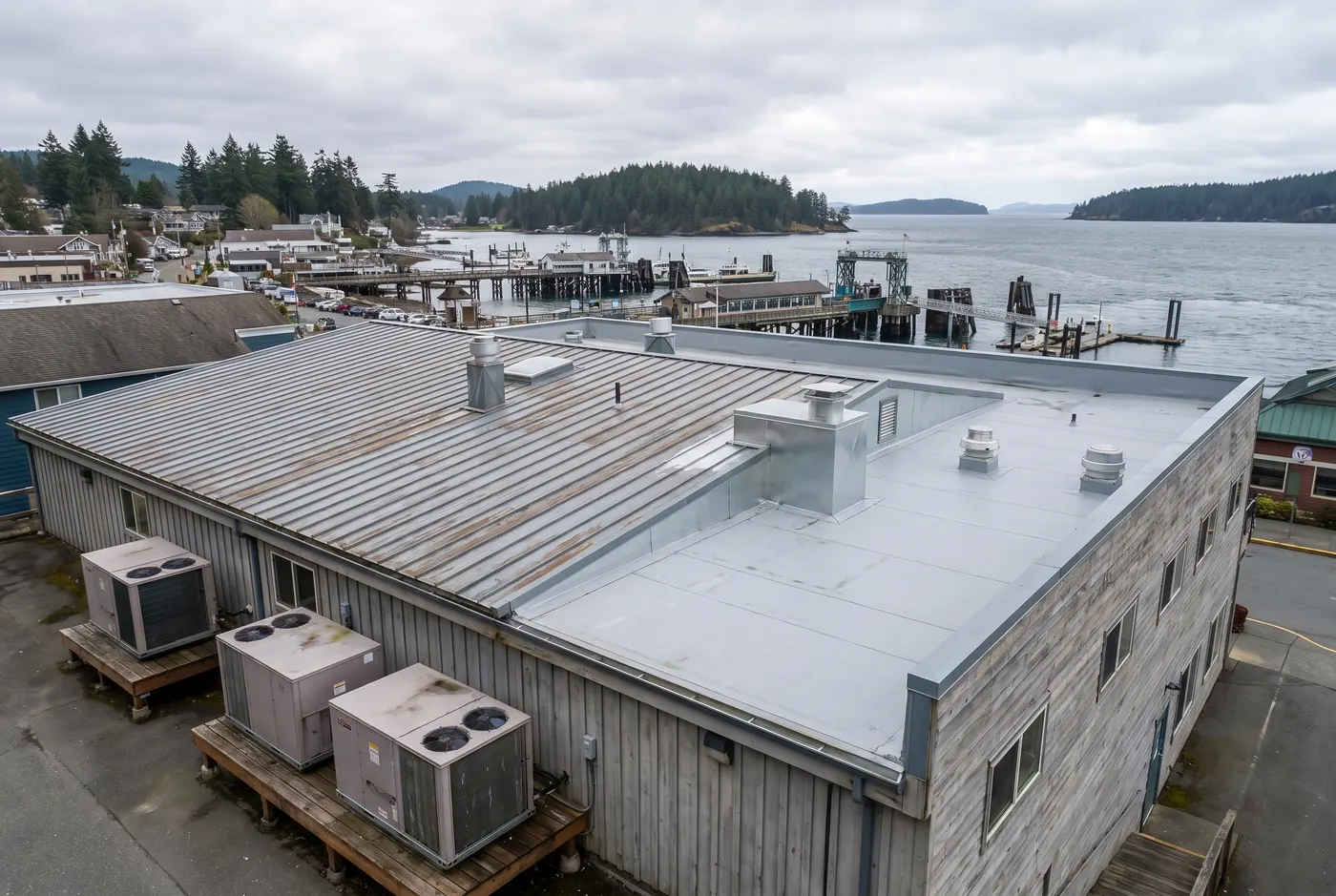
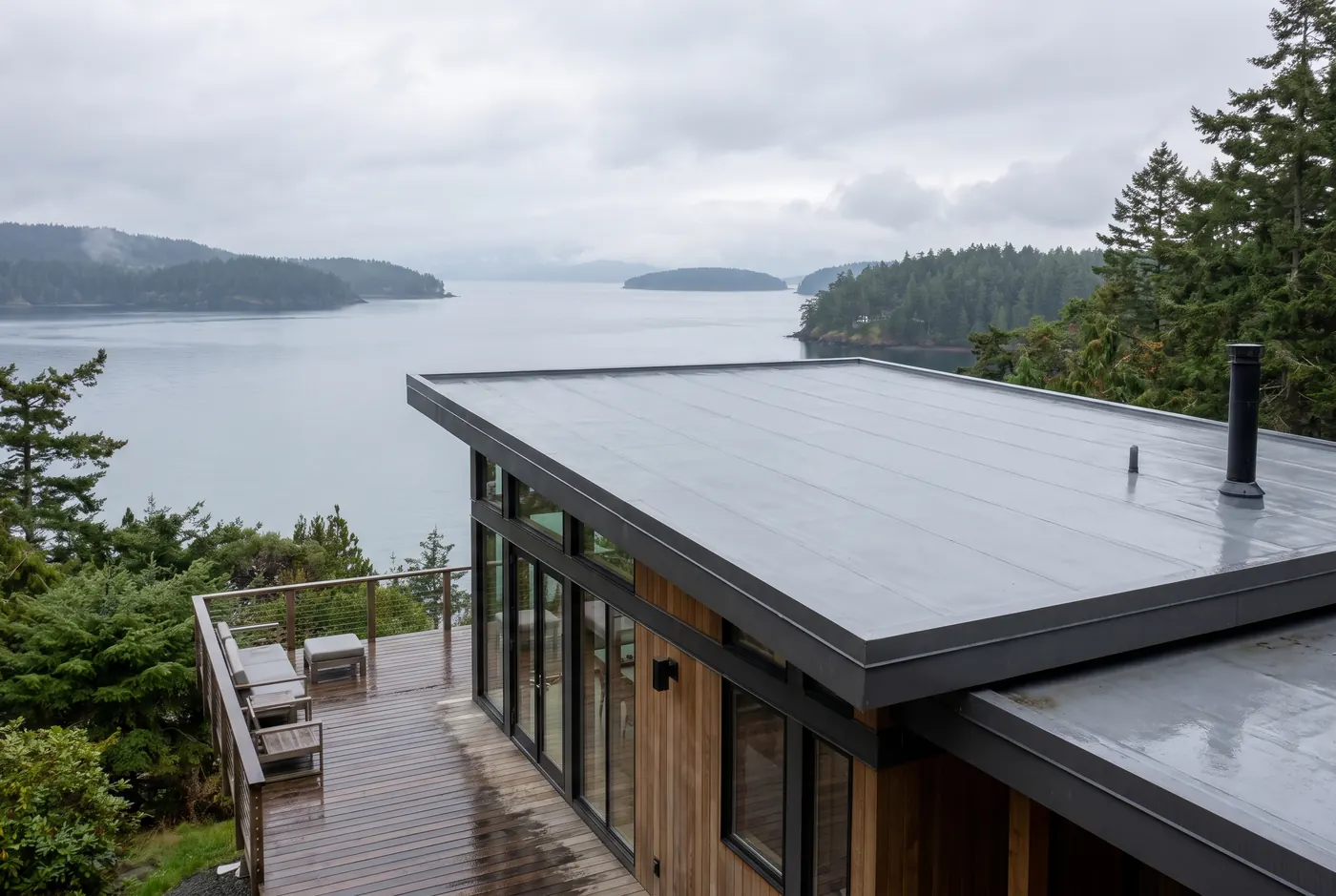
When a roof section is flat or nearly flat, water can’t run off by gravity the way it does on a pitched roof. So shingles and pitched-metal panels are the wrong tool. Flat and low-slope sections are common on modern island designs, dormers, and additions. They need a fully sealed membrane: TPO, PVC, EPDM, or torch-down, usually good for 15-30 years. The system only works with correct slope-to-drain and ice-and-water protection at the edges. If your home has a flat section, our flat and low-slope roofing crews install the right membrane for the exposure and traffic it sees.
Cedar shake: the legacy roof we remove and replace
Many older island homes still wear cedar shake, and it is genuinely handsome. But cedar is a poor match for our climate. Shaded, wet slopes grow moss that traps moisture and rots the wood. Upkeep is constant. And fire risk is higher than with modern materials. For those reasons we do not install new cedar. We remove it and replace it with asphalt or metal that lasts longer and resists moss. If you’re weighing whether your cedar can be saved, our cedar shake roofing service handles the switch, and a full roof replacement is often the honest long-term answer.
Roof shapes: how your roofline changes the plan
The material is only half the story. Your roof’s shape affects wind exposure, flashing, and which systems even apply. Here’s a quick rundown for island homes:
- Gable: the classic two-slope “A” shape. It sheds rain and snow well and is simple to roof. But the open gable end can catch wind uplift on exposed west-side lots.
- Hip: slopes on all four sides. It resists wind better than a gable, a real plus in our stronger west-side gusts. But the extra hips and valleys need careful flashing.
- Gambrel: the barn-style profile with two pitches per side, seen on island farmhouses and outbuildings. The steep lower slopes look great but add flashing work where the pitches meet.
- Flat / low-slope: not a “shape” for shingles or standing-seam at all. These roofs need a membrane system and their own drainage, as covered above.
How long does each roof type last on the islands?
Lifespan is where the choice pays off. Standing-seam metal leads at 50+ years, followed by cedar’s historic 20-40 (which our climate rarely delivers), asphalt at a real-world 20-25, and membrane at 15-30 depending on the system and foot traffic. That gap is the whole cost-per-year case. A single metal roof can outlast two or three shingle roofs on the same house. That’s why forever-homeowners so often choose it, despite the higher first check.
So what is the best roof type for the San Juan Islands?
For most homes, standing-seam metal is the best long-term value, especially near saltwater or if you never want to think about your roof again. Architectural asphalt shingles are the smart pick when budget is tight or you expect to sell within five to ten years. Flat sections get a membrane. Cedar gets replaced.
Still deciding between the two front-runners? Our guide on metal roof vs. asphalt shingles breaks down the trade-offs. And before you budget, read the cost of a new roof in the San Juan Islands so the numbers above have context.
Get a free on-island inspection
The ranges here are for education only. Your roof’s size, pitch, access, shade, and exposure decide the real number. We are a licensed, bonded, and insured WA roofing contractor serving all of the San Juan Islands. We back our work with a 15-year workmanship warranty and give straight, no-pressure advice on the right roof type for your home.
Ready to pick the right roof? Contact us or call (360) 205-1462 to schedule a free on-island inspection and written estimate anywhere on San Juan, Orcas, Lopez, or Shaw.
Frequently asked questions
What is the best roof type for the San Juan Islands?
What are the most common roof types on island homes?
Do you still install new cedar shake roofs?
What is the cheapest roof type?
Can I put a new roof over my existing one?
Ready to move forward?
Talk to an island-based roofer — free inspection, honest advice.