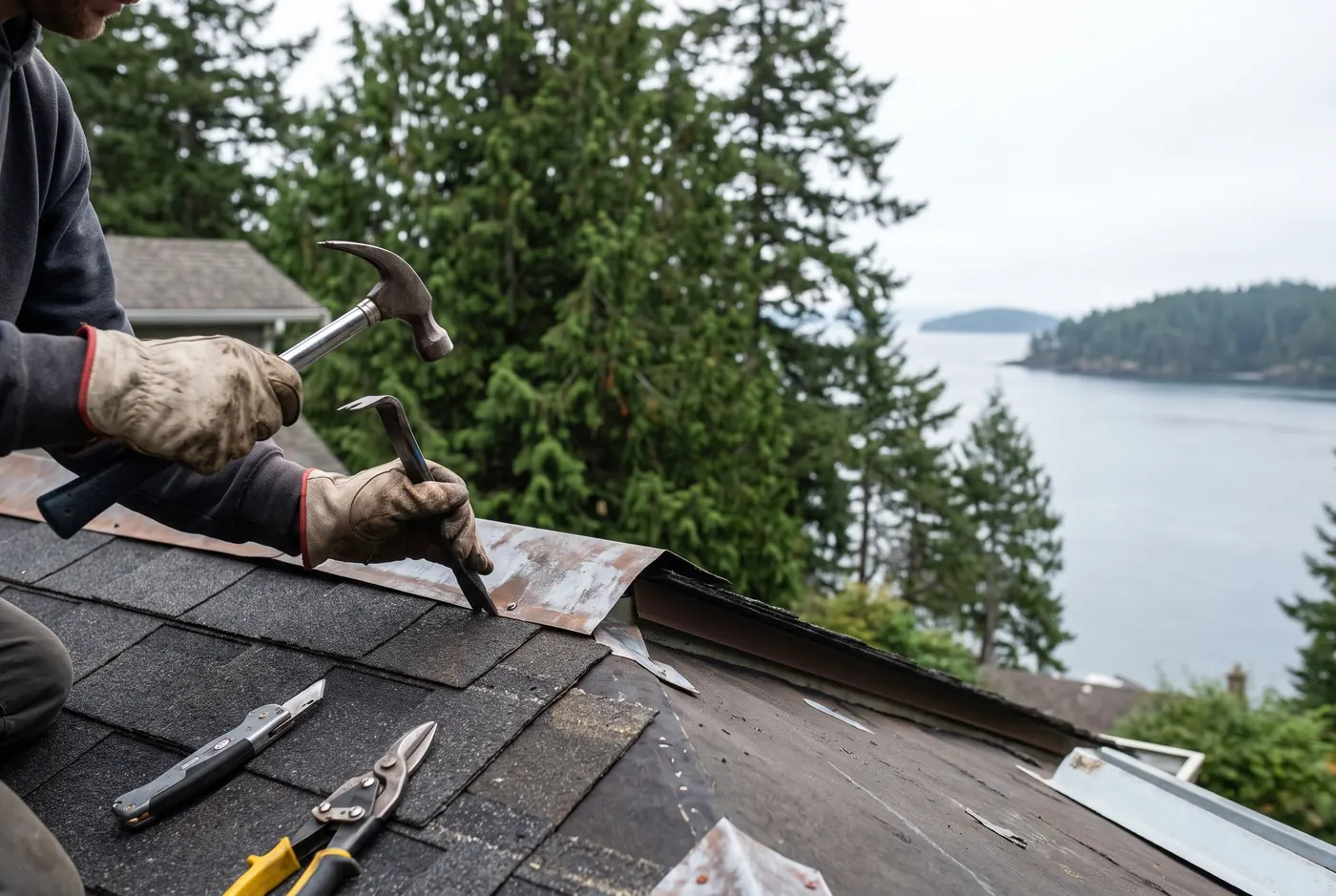
Published July 12, 2026 · by San Juan Roofing Co.
Key takeaways
- A new island roof runs about $9,000 for basic asphalt to $45,000+ for premium standing-seam metal. Most replacements land between $11,000 and $40,000+.
- Ferry crossings, barged material, and off-island disposal add roughly 10–25% to island jobs versus the mainland.
- Metal is the best long-term choice near saltwater; 24-gauge steel with marine-grade Kynar 500 coatings resists salt air and wind.
- Price is driven by roof size, pitch, tear-off layers, access, and material — not by ferry markup alone.
- Only a free on-island inspection turns a price range into your real, written number.
Replacing a roof is one of the biggest maintenance decisions an island homeowner makes. And the gap between a quick mainland quote and the real island number surprises almost everyone. Living on San Juan, Orcas, Lopez, or Shaw means your roof fights roughly 40 inches of rain a year, salt air off the water, and moss creeping down shaded north slopes under the Douglas fir. It also means every crew and every bundle of shingles rides the ferry to reach you. Here is what a new roof actually costs out here in 2026, and exactly why.
A new roof in the San Juan Islands typically costs $9,000–$24,000 for asphalt shingles and $14,000–$45,000+ for standing-seam metal. Most full replacements land between $11,000 and $40,000+. New cedar runs $18,000–$50,000+, but we recommend replacing cedar with a warrantied shingle or metal roof rather than reinstalling it. You get more roof for the money. Island ferry logistics and off-island disposal add roughly 10–25% over a comparable mainland job. Your exact price comes from a free on-island inspection.
What does a new roof cost by material in the San Juan Islands?
Cost varies most by material and roof size. The ranges below are island-adjusted estimates for a typical single-family home — not quotes. A free on-island inspection turns these ranges into a firm written number for your house.
| Roof material | Island price range (2026) | Approx. cost per sq ft | Expected lifespan |
|---|---|---|---|
| Asphalt shingle | $9,000 – $24,000 | $4.50 – $9 | 20 – 30 years |
| Standing-seam metal | $14,000 – $45,000+ | $9 – $18 | 40 – 70 years |
| Cedar shake (we replace, not reinstall) | $18,000 – $50,000+ | $12 – $22 | 20 – 35 years |
| Flat / low-slope | $8,000 – $26,000 | $7 – $16 | 20 – 30 years |
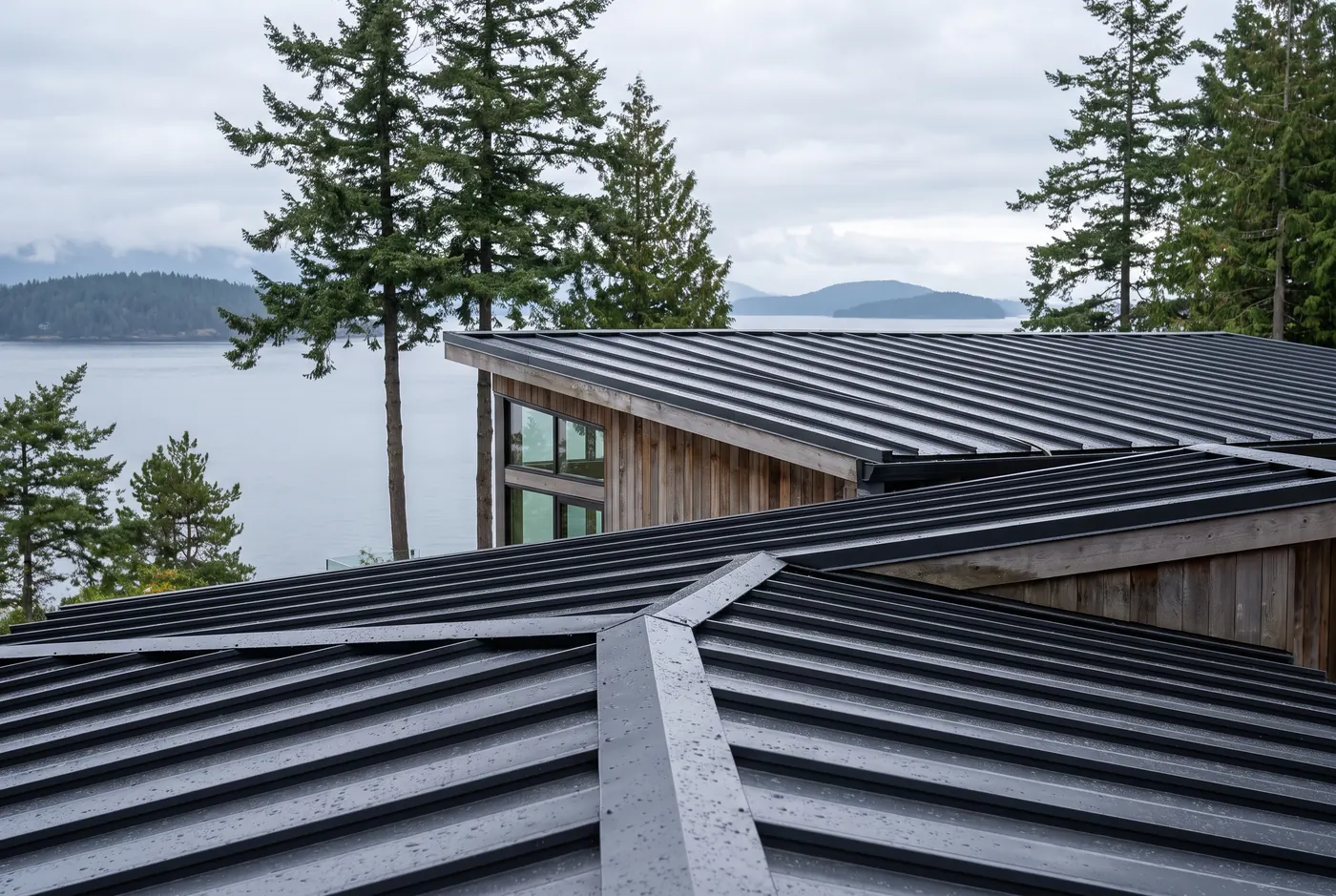
A straightforward full roof replacement most often lands between $11,000 and $40,000+ once tear-off, underlayment, flashing, and disposal are included. Metal costs the most up front but is the best long-term island roof. It shrugs off wind and sheds rain fast. And with marine-grade Kynar 500 / PVDF coatings on 24-gauge steel, our standing-seam metal roofing systems stand up to salt air far better than shingles near the water.
Why are island roofs more expensive than the mainland?
The material on your roof costs about the same in Anacortes as it does in Friday Harbor. What changes is everything it takes to get a crew, a dumpster, and a truck of steel onto the island — and the old roof back off. Expect island logistics to add roughly 10–25% versus a comparable mainland job. The drivers:
- Ferry crossings for the crew. Every working day, the crew either rides the Washington State Ferry both ways or stages on-island. Ferry time is paid time, and summer sailings sell out.
- Barging and freight for material. Pallets of shingles, metal panels, and cedar are barged or ferried over, with freight and handling a mainland yard never charges.
- Off-island disposal. Tear-off debris can’t go to a local landfill — it’s hauled back across the water to a mainland transfer station. Disposing of a multi-layer tear-off is one of the biggest hidden line items on an island roof.
- Lodging and staging. On multi-day jobs on Orcas, Lopez, or Shaw, crews may need lodging or a longer staging window. And specialty deliveries (a crane or lift) are scheduled around the boat.
None of this is markup for its own sake. It’s the real cost of doing careful work at the end of a ferry line. An honest island contractor prices it into the estimate instead of surprising you with change orders halfway through.
What does roofing cost per square foot out here?
Roofers price by the “square” — a 10-by-10 area, or 100 square feet. A typical island home has 15–30 squares of roof once pitch and overhangs are counted. So a 2,000-square-foot footprint can carry 2,400 or more square feet of actual roof surface on a steep pitch.
On a per-square-foot basis, island-adjusted estimates run about $4.50–$9 for asphalt, $9–$18 for standing-seam metal, and $12–$22 for cedar. Steeper roofs, complex rooflines with lots of valleys and dormers, and homes right on the saltwater sit at the top of each range. They need more labor, more flashing, and corrosion-resistant fasteners that won’t rust in the marine air.
What factors move the price of your roof?
Two similar-looking homes on the same road can get very different estimates. The biggest levers:
- Roof size and complexity. More squares, plus valleys, dormers, skylights, and chimneys, mean more labor and flashing.
- Pitch. Steep roofs are slower to work and require fall protection, pushing labor up.
- Tear-off layers. Stripping one layer is routine; two or three old layers mean more labor and far more off-island disposal.
- Access and site. A long driveway, tight lot, or a west-side home exposed to wind about 20% stronger than Anacortes changes staging and safety.
- Material and coatings. Three-tab shingle vs. architectural shingle vs. 24-gauge Kynar-coated metal is the single biggest price swing, especially near saltwater.
- Extras done right. New underlayment, upgraded flashing, gutters, and zinc or copper ridge strips to stop moss regrowth add cost but protect the investment.
If your current roof has moss, ask whether a moss treatment or roof cleaning makes sense before — or instead of — replacement. Sometimes a shaded north slope needs cleaning and zinc strips, not a full tear-off. We never pressure-wash shingles, which strips the granules and shortens roof life.
How do you get an accurate number?
A range tells you whether to budget $12,000 or $40,000. Only an inspection tells you your number. Here’s how to get an accurate, honest estimate:
- Book a free on-island inspection. We measure the roof, count the layers, and check the decking, flashing, and ventilation, photographing problem areas as we go.
- Get a written estimate, not a phone guess. It should itemize tear-off, disposal, underlayment, material, flashing, and cleanup.
- Ask for honest repair-vs-replace advice. If a targeted roof repair buys you five more years, we’ll tell you — replacing a roof that isn’t ready is wasted money.
- Confirm the contractor is a licensed, bonded, and insured WA roofing contractor who backs the work with a workmanship warranty.
Whether you’re in Friday Harbor, Roche Harbor, Eastsound, Deer Harbor, Lopez Village, or out on Shaw, the inspection and written estimate are free. That’s the only way to turn these ranges into a real, honest price for your home.
Ready for your real number?
Stop guessing from a range. Schedule a free on-island inspection and written estimate, or call San Juan Roofing Co. at (360) 205-1462. You’ll get honest repair-vs-replace advice and a clear, itemized price for your island home — no pressure, no surprises.
Frequently asked questions
Why are island roofing quotes higher than the mainland?
How much does a metal roof cost in the San Juan Islands?
What is the cheapest way to reroof an island home?
Is the roof inspection really free?
How long does a new roof last in the San Juan Islands?
Ready to move forward?
Talk to an island-based roofer — free inspection, honest advice.