Published July 12, 2026 · by San Juan Roofing Co.
Key takeaways
- Kill moss with a treatment first, then lift it gently with a soft brush and a low-pressure rinse working downward.
- Never pressure-wash a shingle roof; it strips protective granules and voids many warranties.
- Zinc or copper ridge strips are the single best way to stop moss from coming back on shaded island roofs.
- Professional moss treatment and cleaning runs about $400–$1,600 in the San Juan Islands, depending on roof size and access.
- Moss holds water against the roof, lifts shingle edges, and eventually rots the deck, so treat it early.
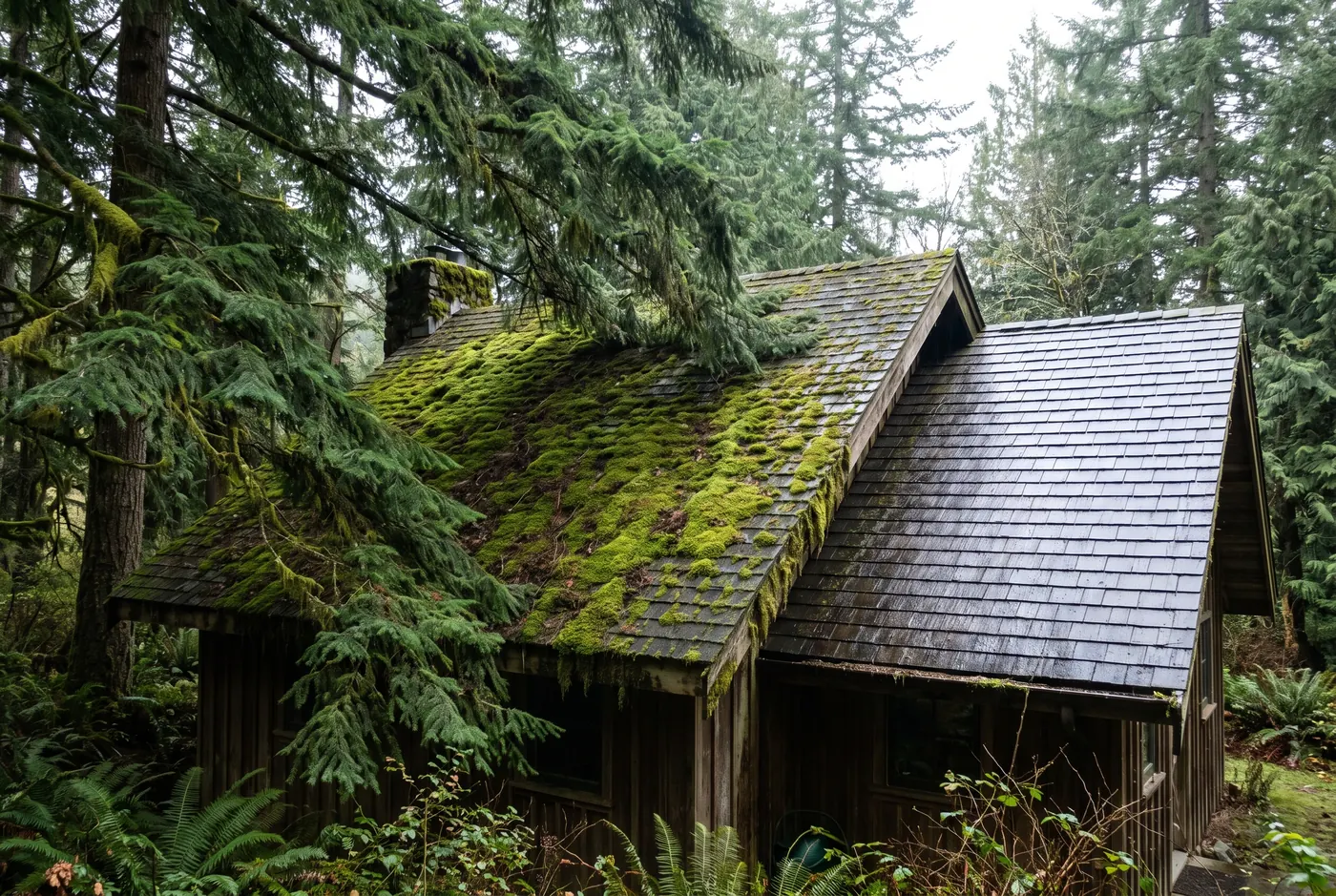
Roof moss is practically a local sport in the San Juan Islands. The islands get roughly 40 inches of rain a year, damp winters, and shaded north slopes under towering Douglas fir. So moss finds a foothold on almost every older roof from Friday Harbor to Eastsound. The good news: you can remove it safely and keep it gone.
To remove roof moss safely, kill it with a moss treatment (a wet-and-forget product or a diluted 50/50 water–bleach mix). Let it die back, then lift the debris with a soft brush and a low-pressure rinse working downward. Never pressure-wash. Finish with zinc or copper ridge strips so every rain carries metal ions down the slope and stops the moss from coming back.
Why is roof moss a problem in the San Juan Islands?
Moss is not just a cosmetic nuisance. It behaves like a living sponge. It soaks up rain and holds that moisture against your shingles for days instead of letting the roof dry between storms. That constant wetness is exactly what a roof is designed to shed.
- It holds water. Trapped moisture keeps the roof surface saturated, accelerating granule loss on asphalt and rot on cedar.
- It lifts shingles. As moss grows, its rhizoids creep under the shingle edges and pry them upward, opening paths for wind-driven rain.
- It rots the deck. Water that gets past lifted shingles reaches the wood sheathing below. A soft, rotted deck is a far more expensive repair than the moss ever was.
Island geography makes it worse. Homes on Orcas and San Juan tucked under evergreens rarely get enough direct sun to dry out. The north-facing slopes stay shaded and cool all winter. Add the constant humidity near saltwater and you have a near-perfect moss nursery. Left alone, a heavy moss mat can shave years off an otherwise healthy roof. Catching it early is the whole game, which is why a routine roof inspection and maintenance plan pays for itself out here.
How to remove roof moss step by step
Work on a dry day, wear soft-soled shoes and fall protection, and remember that wet moss is dangerously slick. If your roof is steep, tall, or the deck feels spongy underfoot, stop and call a pro rather than risk a fall.
- Time it right. Pick a dry stretch in late spring or summer so the treatment can dwell and the moss dies back before November’s heaviest rain.
- Dry-remove the loose mats. Use a soft-bristle brush or a plastic scraper and work downward, with the grain of the shingles. Never scrape upward or gouge, which breaks the seal between courses.
- Apply a moss treatment. Use a commercial “wet-and-forget” style product, a zinc-sulfate solution, or a careful 50/50 mix of water and bleach. Wet nearby plants first and rinse them after to protect landscaping.
- Let it dwell, then rinse gently. Give the treatment time to kill the moss (follow the label). Then use a garden hose on low pressure, or simply let the next rain carry the dead debris off. Always rinse from the ridge down.
- Clear the gutters and valleys. Dead moss and fir needles clog gutters fast on island homes. Flush them so water actually drains; clogged runoff feeds the next generation of moss.
- Inspect what the moss was hiding. Look for cracked, curled, or missing shingles and any soft spots. If you find damage, our roof repair crew can address it before it spreads.
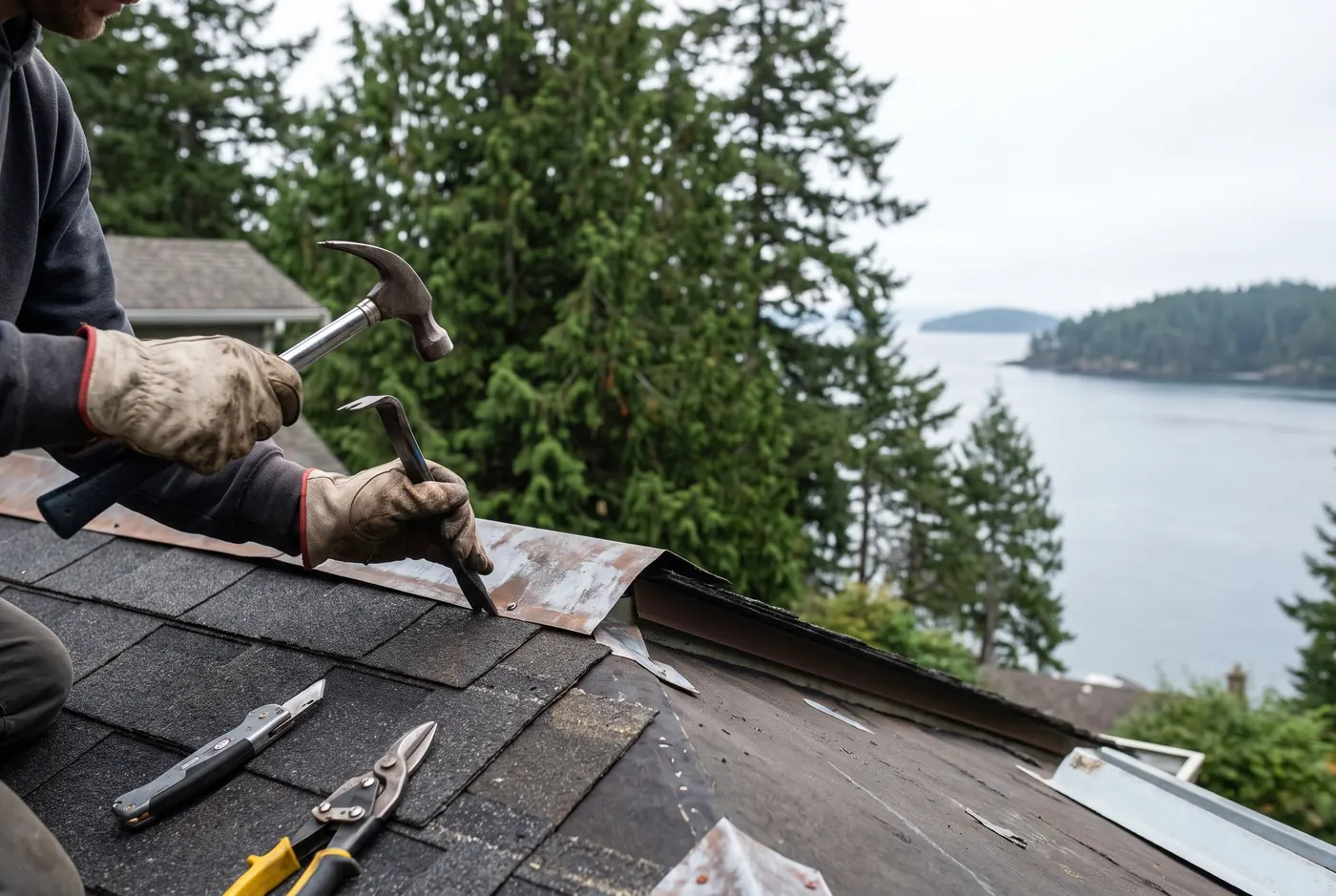
- Install zinc or copper strips. Fasten metal strips just below the ridge so rain releases moss-killing ions across the slope for years.
- Open up the roof. Trim back overhanging Douglas fir and cedar branches to add sunlight and airflow, the two things moss hates most.
A hard no on pressure washing. It is tempting, but a pressure washer strips the protective granules off asphalt shingles, drives water up under the courses, and can void your manufacturer warranty. On cedar it splinters the wood. We only ever use low pressure and hand tools, which is exactly how our moss treatment and roof cleaning service works.
How do you stop roof moss from coming back?
Removal is only half the job. On a shaded island roof, moss will return within a season or two unless you change the conditions that let it grow.
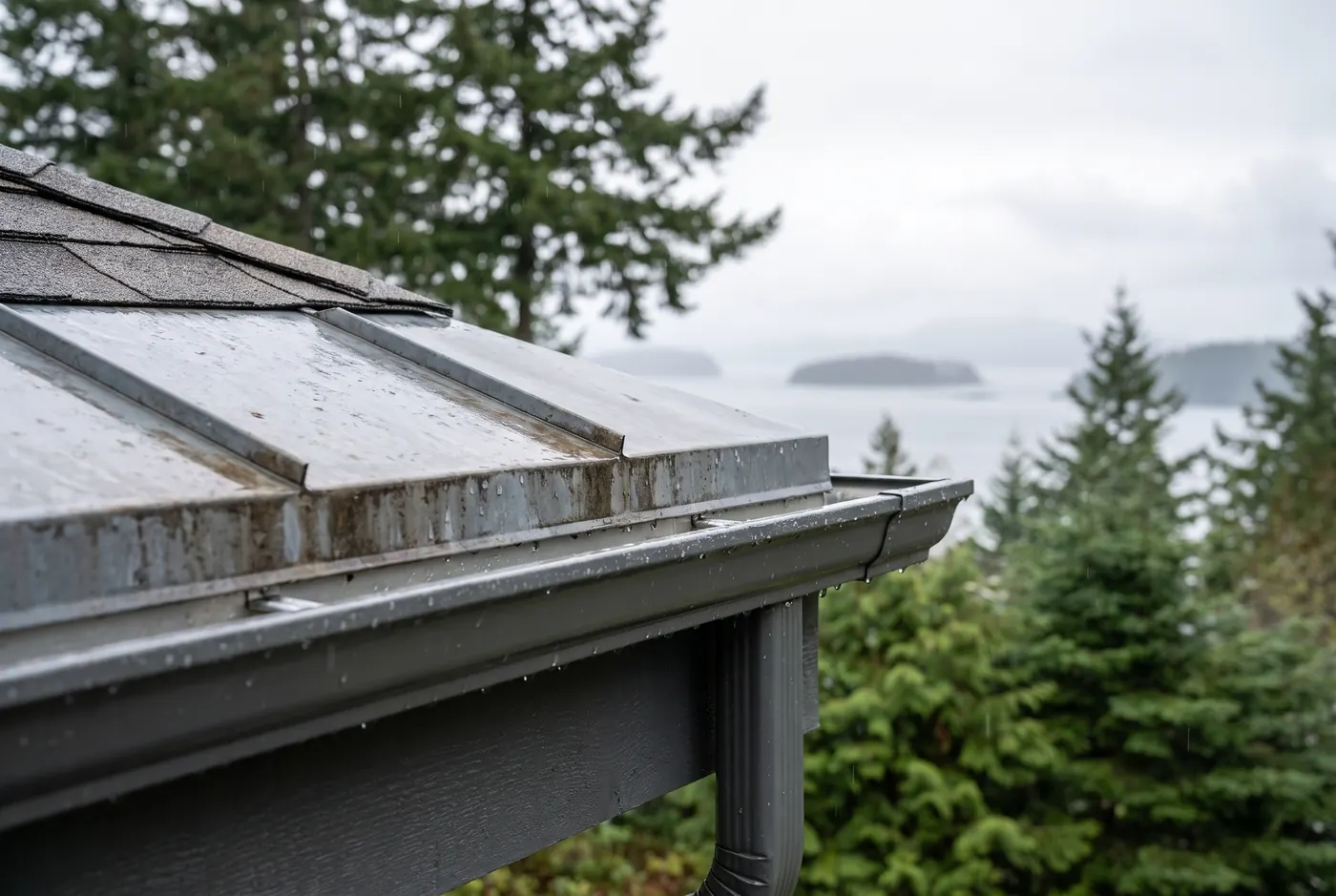
- Zinc or copper ridge strips. This is the most reliable defense. Every rainfall washes a trace of metal down the roof that keeps moss and algae from establishing. Copper lasts longest; zinc is more budget-friendly.
- Trim the canopy. More sun and airflow means a roof that dries quickly. Even thinning a few fir limbs over the north slope makes a real difference on Orcas and Lopez properties.
- Keep it clean. Blow or brush off leaves, needles, and organic debris each fall so moss has nothing to root into.
- Schedule maintenance. A quick annual check catches early moss and minor damage before either becomes a bill.
If you are already weighing a new roof, this is worth knowing. Standing-seam metal is the best long-term choice for our climate. Moss struggles to grip a smooth metal panel, and paired with zinc washers it stays remarkably clean. If a replacement is on the horizon, our metal roofing systems are built for island rain, wind, and salt air.
How much does roof moss removal cost?
Professional moss treatment and cleaning in the San Juan Islands typically runs $400 to $1,600. The spread comes down to roof size, pitch, height, how thick the moss has grown, and access. Ferry logistics — staging crew, hauling gear, and off-island disposal — add modestly to island jobs versus the mainland. Every figure below is an estimate for education, not a quote. A free on-island inspection gives you your real number.
| Task | Island price range | Notes |
|---|---|---|
| Professional moss treatment & soft cleaning | $400 – $1,600 | Depends on roof size, pitch, and moss buildup |
| Zinc/copper ridge strip install | $300 – $900 | Often bundled with a cleaning |
| Annual maintenance visit | $250 – $600 | Keeps moss from ever getting a foothold |
| DIY supplies (treatment + brush) | $60 – $200 | Plus your time and the fall risk |
| Roof inspection | Free | Written report; real-estate reports up to ~$450 |
| Repair of moss-related damage | $450 – $3,500 | If lifted shingles or a soft deck are found |
DIY or hire a pro?
Light, early moss on a single-story roof with an easy pitch is a reasonable DIY project. If you are comfortable on a ladder, a bag of treatment, a soft brush, and a garden hose will get you a long way. You will spend far less than a service call.
Call a professional when the roof is steep or two stories, when the moss mat is thick and established, when you have cedar shakes (which are easy to damage), or when you spot any lifted shingles or soft decking. A pro brings fall protection, the right dwell times, and an eye for the damage moss hides. The math is simple: a $400–$1,600 cleaning is cheap insurance against a rotted deck that pushes you toward a $11,000-plus roof replacement.
Ready to get the moss off — and keep it off?
San Juan Roofing Co. is a licensed, bonded, and insured island contractor serving San Juan, Orcas, Lopez, Shaw, and the outer islands. We treat moss the right way, install zinc strips to stop regrowth, and give honest repair-vs-replace advice — never pressure washing, never upselling. Contact us or call (360) 205-1462 for a free on-island inspection and a written estimate for moss treatment and roof cleaning.
Frequently asked questions
Should I pressure-wash moss off my roof?
How do I stop roof moss coming back?
How much does roof moss removal cost in the San Juan Islands?
When is the best time to treat roof moss?
Can moss actually damage my roof, or is it just ugly?
Ready to move forward?
Talk to an island-based roofer — free inspection, honest advice.