Published July 27, 2026 · by San Juan Roofing Co.
Key takeaways
- Most flat-roof leaks in San Juan County start at seams, penetrations, and low spots that pond water — not in the open field of the membrane.
- A sound membrane with a failed seam or flashing is a repair; a saturated, blistered, or ponding-everywhere roof is usually a recoat or replacement.
- We repair torch-down (mod-bit), TPO, PVC, and EPDM rubber — and re-slope drainage so water actually leaves the roof.
- Island flat-roof repairs typically run within our $8,000–$26,000 low-slope range only for full sections; a targeted leak repair is far less.
- Standing water after 48 dry hours ('ponding') is the #1 sign your flat roof needs attention before winter.
Flat and low-slope roofs in San Juan County almost always leak at their weak points — seams, wall and curb flashing, pipe boots, and low spots that pond water — not in the open field of the membrane. If the membrane is otherwise sound, that's a repair: we find the true source, weld or patch the failure, re-detail the flashing, and correct the drainage so water leaves the roof. Only a widely blistered, saturated, or everywhere-ponding roof calls for a recoat or replacement.
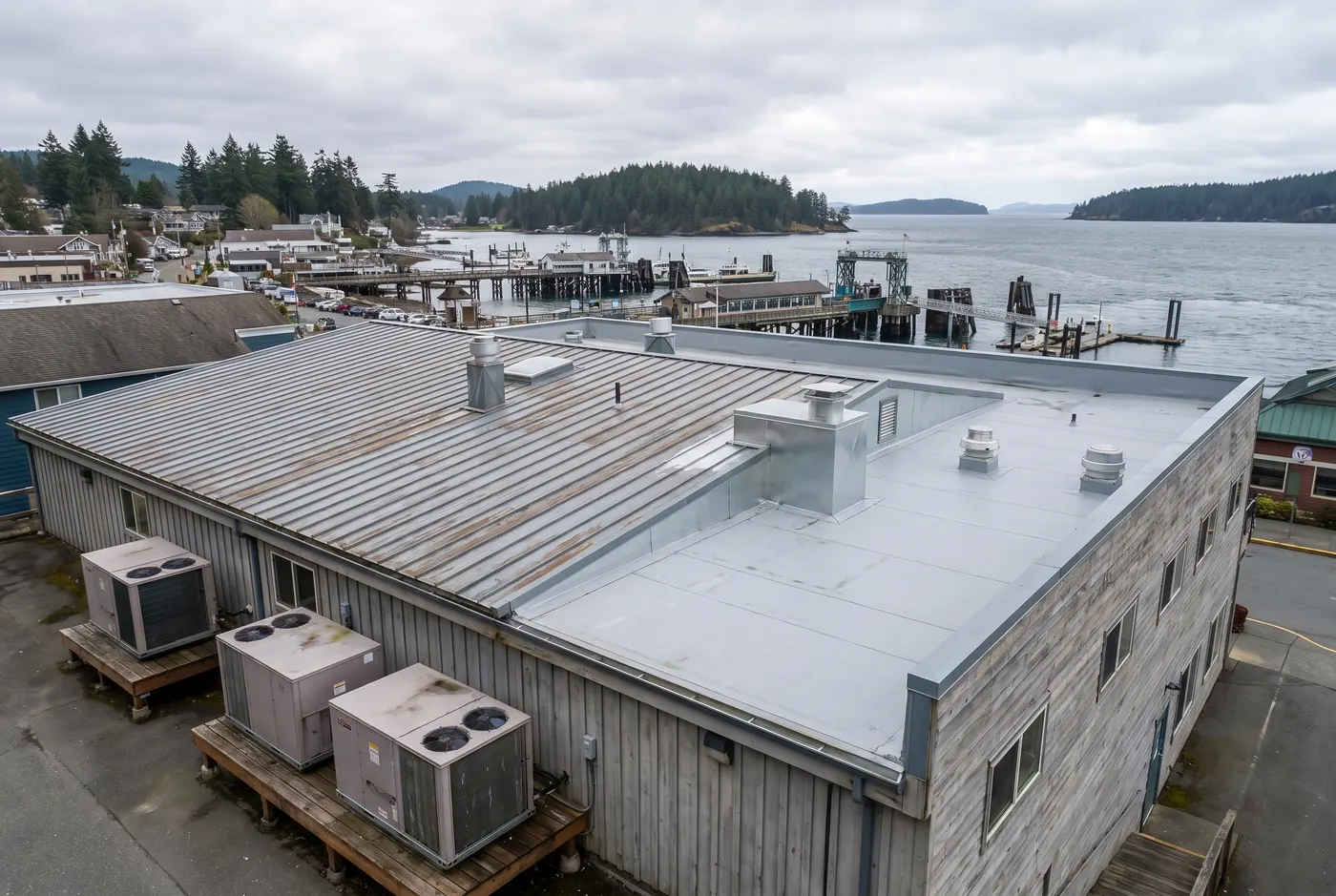
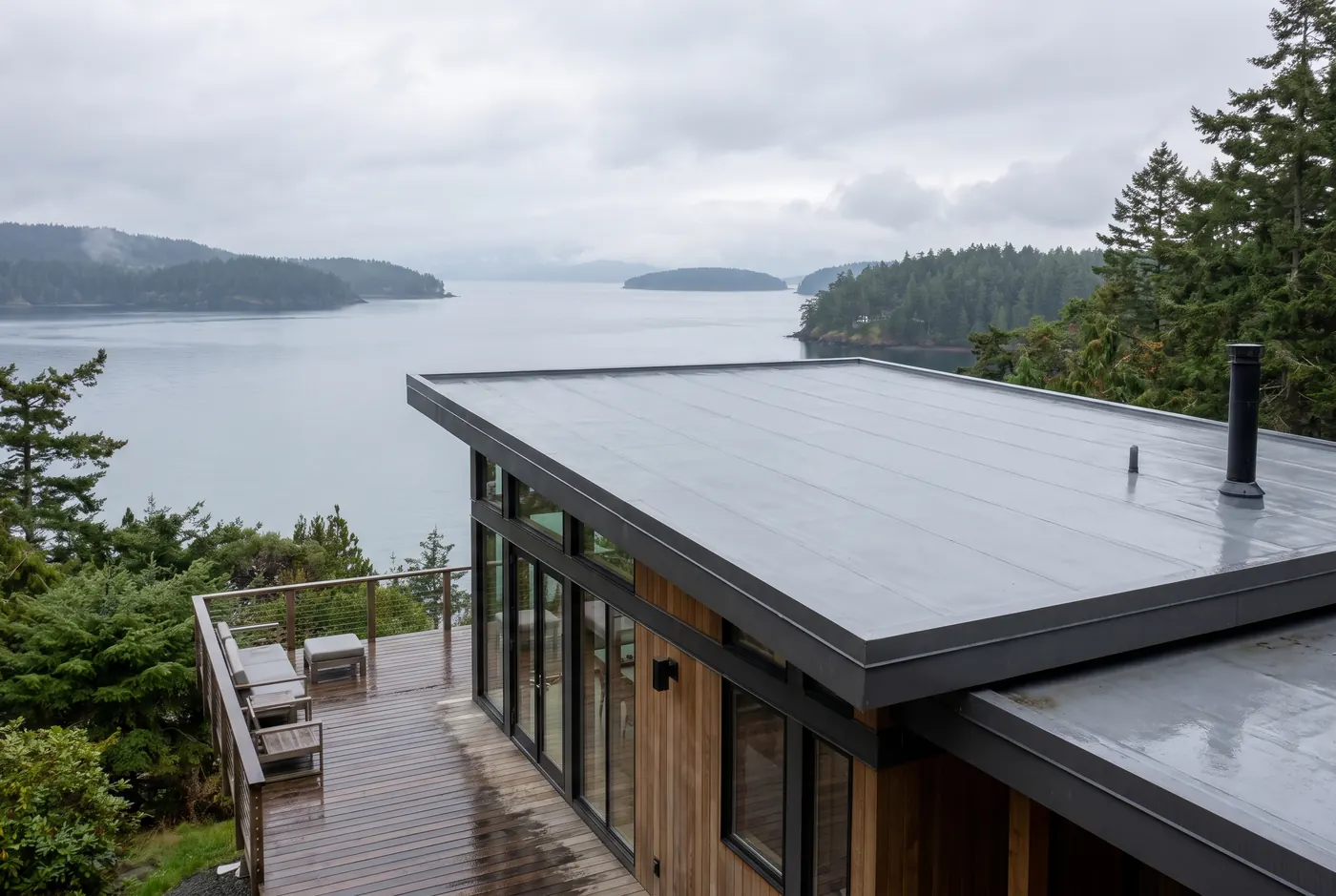
Flat roofs are common on island additions, garages, shop buildings, and modern homes from Friday Harbor to Eastsound to Lopez Village. They’re also the roofs that punish sloppy detailing the fastest. With 40 inches of rain a year and long wet winters, a low-slope roof has to shed water perfectly — and when it doesn’t, the water has nowhere to run off, so it sits and works into every seam.
Where island flat roofs actually leak
A pitched roof sheds water by gravity; a flat roof holds it and relies on a continuous, welded, watertight membrane. That means the failures cluster at the interruptions:
- Seams — where two sheets of membrane meet. A split, lifted, or cold-welded seam is the most common low-slope leak.
- Penetrations — pipe boots, vents, and drains. Boots crack and pull away; drains clog with fir needles and back water up.
- Wall and curb flashing — where the flat roof meets a wall, parapet, or rooftop unit. Flashing lifts and opens first.
- Low spots (ponding) — a shallow depression where water stands after the rain stops, breaking the membrane down faster than anywhere else on the roof.
Because water tracks along the deck before it drips, the ceiling stain inside is rarely under the real breach. Chasing the spot overhead wastes money. We map the interior, then find the true entry point uphill.
Repair, recoat, or replace?
- Repair — the membrane is sound and the failure is local (a seam, boot, or section of flashing). We fix the breach the way that membrane is meant to be fixed and re-detail around it.
- Recoat — the field is aging and chalky but not saturated. A compatible coating buys years, especially paired with fixing drainage.
- Replace — the membrane is widely blistered, wet underneath, or ponds across the whole roof. At that point a patch just moves the next leak a few feet over.
We show you which one you’re looking at, with photos, and give you the honest repair-vs-replace call — the same way we do on roof repair across the county.
Why island flat-roof quotes look different
An honest island quote prices the ferry travel for crew and materials, the barge for a full membrane job, and hauling the old roof off-island to dispose of it. A mainland roofer who forgets that either cuts corners on the detailing or hits you with change orders mid-job. We price all of it up front, and we stage low-slope work around the weather so a torch-down or welded seam goes down dry.
If your flat roof is ponding, staining a ceiling, or just overdue for a look before winter, a free on-island inspection is the cheapest move you can make.
Frequently asked questions
Why does my flat roof keep leaking in the San Juan Islands?
Can a flat roof be repaired, or does it need full replacement?
How much does flat roof repair cost on the islands?
What is ponding water and why does it matter?
Do you repair torch-down, TPO, and rubber roofs?
Flat & Low-Slope Roofing in San Juan County
Island-based crew, free on-island inspection, honest repair-vs-replace advice.